The Covent Garden area originally belonged to the Benedictines of Westminster. The monks maintained a kitchen garden there, where they grew their food. In fact, they referred to it as their ‘convent garden’, with the name eventually evolving to be Covent Garden.
The land was seized by King Henry VIII when he dissolved the English monasteries in 1536. It then went through various royal hands, where it did very little. In the 1630s, Francis Russell, the fourth Earl of Bedford, decided to build a house for himself in Covent Garden on the north side of The Strand.
He decided to make money out of it and develop the area. So, he commissioned Inigo Jones, King Charles I's Royal Architect, to build a square there, with houses fit for the aristocracy. This led to The Piazza, with its Italian style
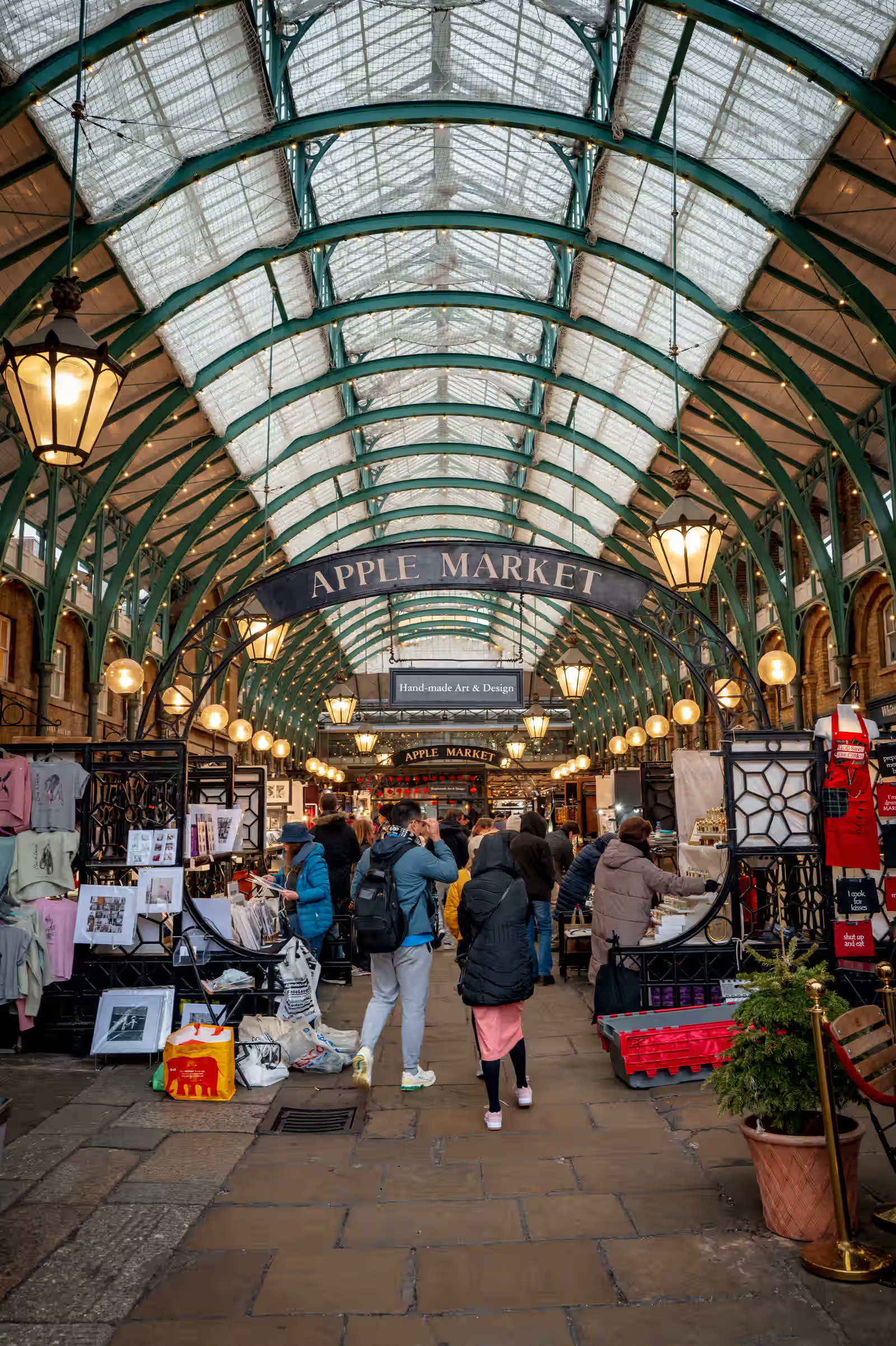
Temporary market stalls were held in Covent Garden in the 1650s before King Charles II granted a licence to hold a market there in 1670. The market sold fruit, vegs, flowers and herbs. It became famous for pineapples, with the fruit being adopted as the symbol of Covent Garden.
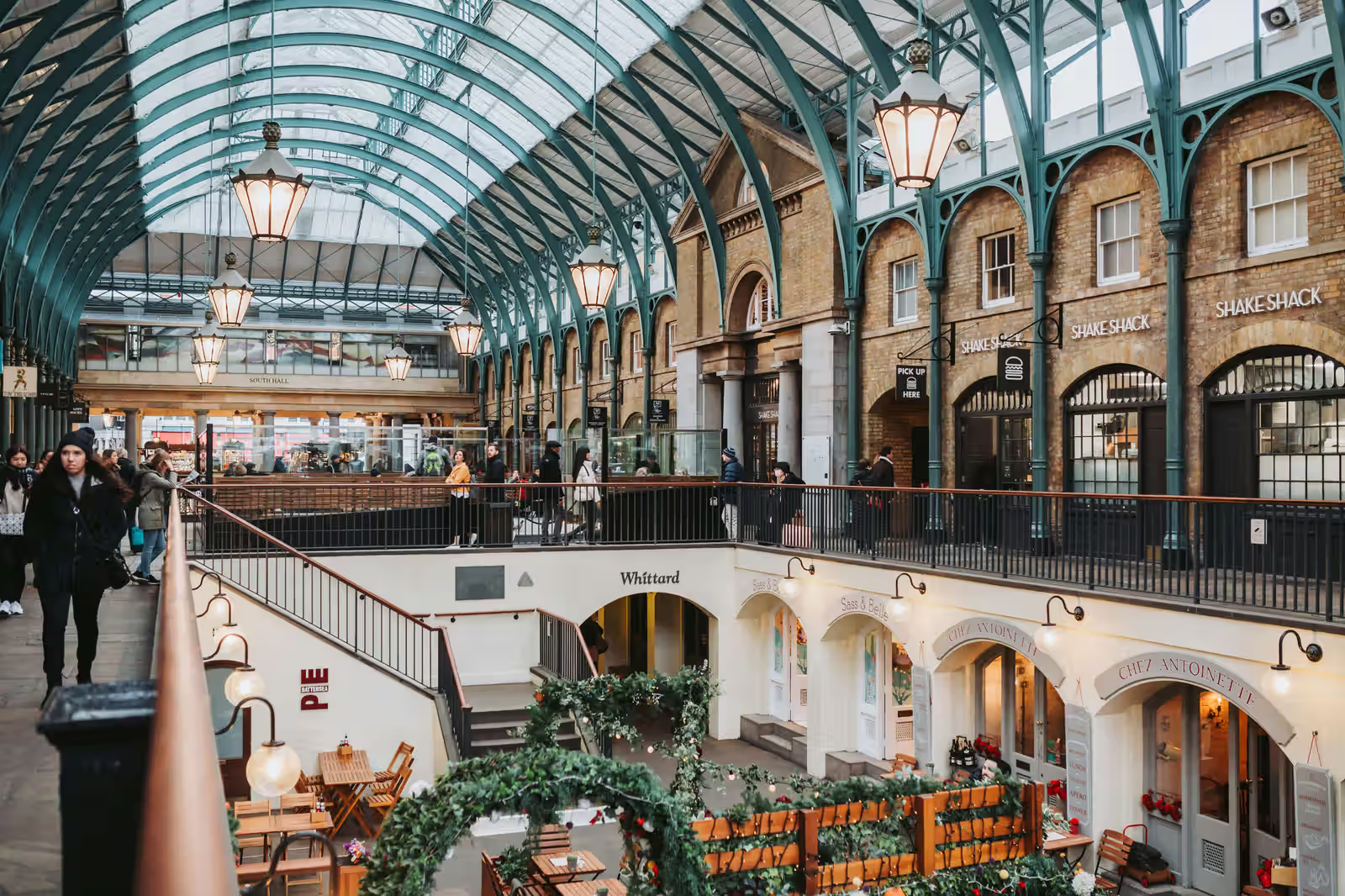
The market was rebuilt in 1748 to add an upper story of shops. It had another facelift in 1830, adding the iconic Greco-Roman design. In 1974, the official market moved to Battersea, with further redevelopment in the area. Covent Garden was transformed into a hub of fashion, food and entertainment. This is the Covent Garden we know today.
x1600.avif?sfvrsn=7c616845_1)